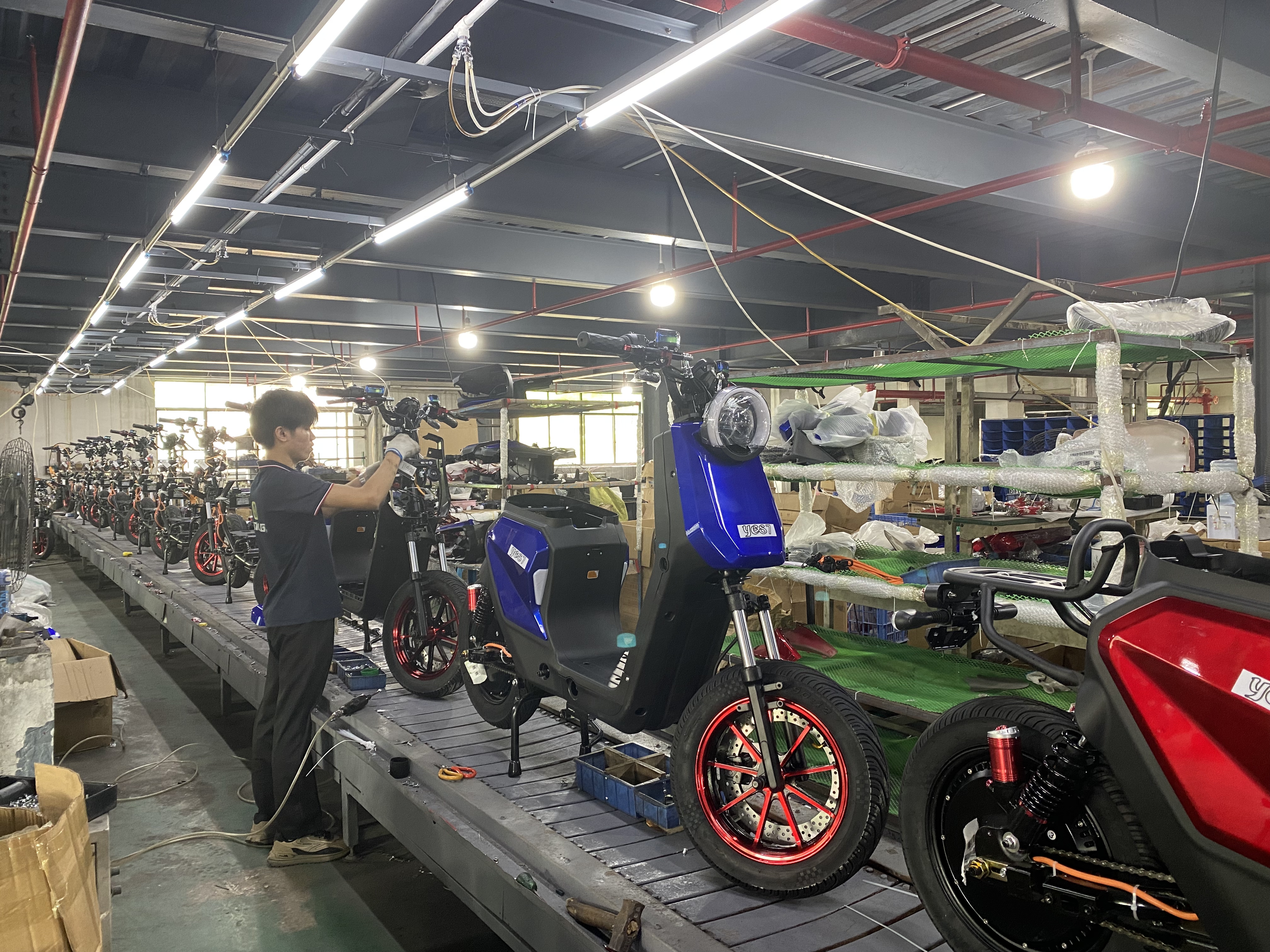
Production Assembly Line
The production assembly line of Hekang Vehicle Industry is the core link for the company to achieve efficient and precise production of two-wheeled and three-wheeled motorcycle products. It integrates advanced technologies, elaborate technological processes and a strict quality control system, ensuring that each motorcycle coming off the production line can meet high-quality standards.
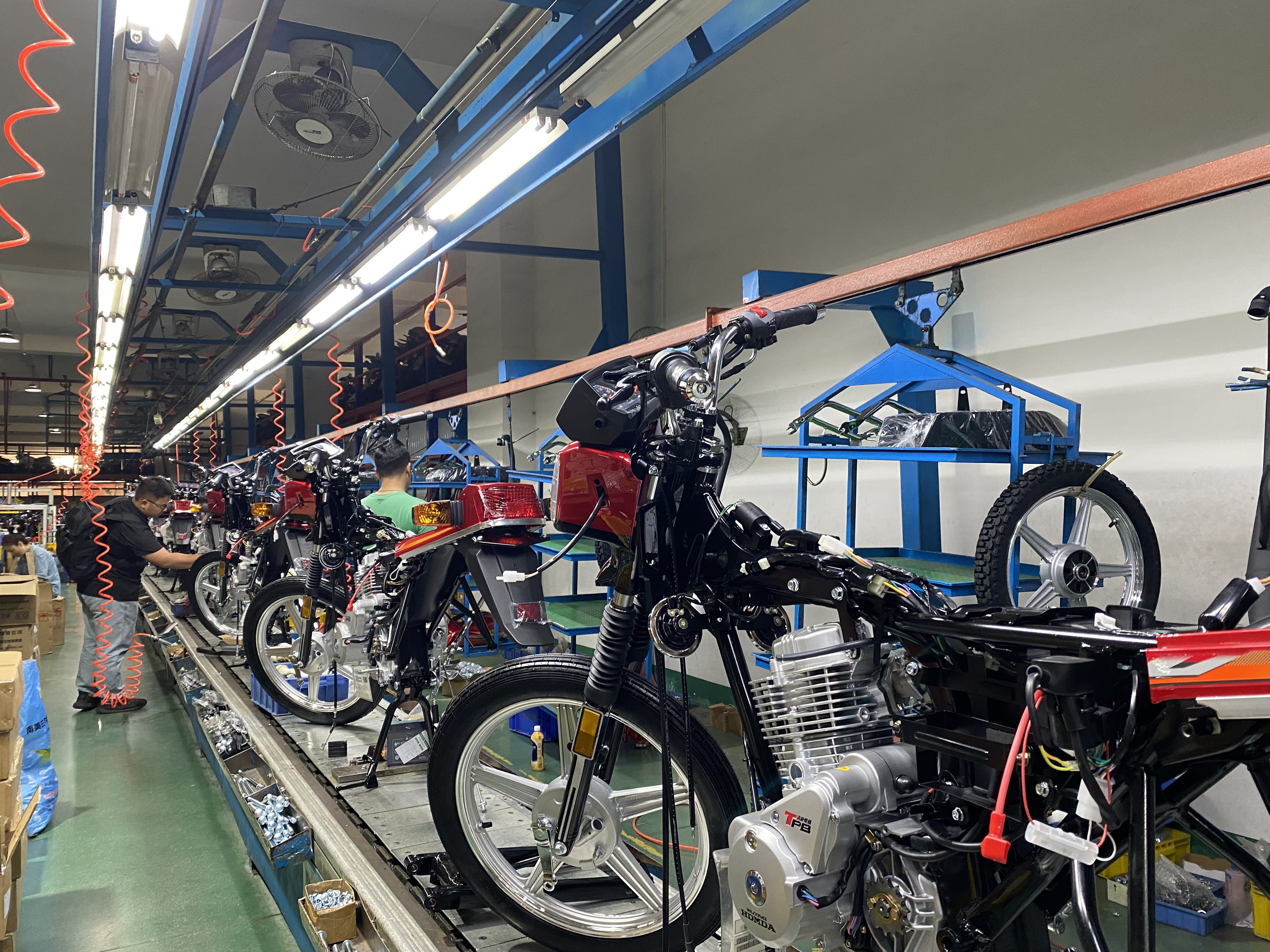
I. Layout and Equipment of the Production Line
1. Reasonable and Efficient Layout: The entire production assembly line has been carefully planned. Each work area is set up in sequence according to the production process, starting from the initial sorting and pretreatment of components, gradually assembling them into a complete frame, installing the engine and other key components, and finally conducting the overall vehicle debugging and testing. Each link is closely connected, and the material flow is smooth, minimizing the waste of time and logistics costs in the production process.
2. Advanced Equipment Configuration: A series of advanced production equipment is equipped to meet the needs of different production processes. For example, in the frame welding process, high-precision welding robots are adopted, which can achieve precise and stable welding operations, ensuring that the strength and precision of the frame structure reach the optimal state. During the component assembly process, automated screw tightening devices are used, which not only improve the assembly efficiency but also accurately control the tightening torque to ensure the reliability of component connections. In addition, there are professional painting equipment that can achieve a uniform, beautiful and durable paint spraying effect.
II. Production Process
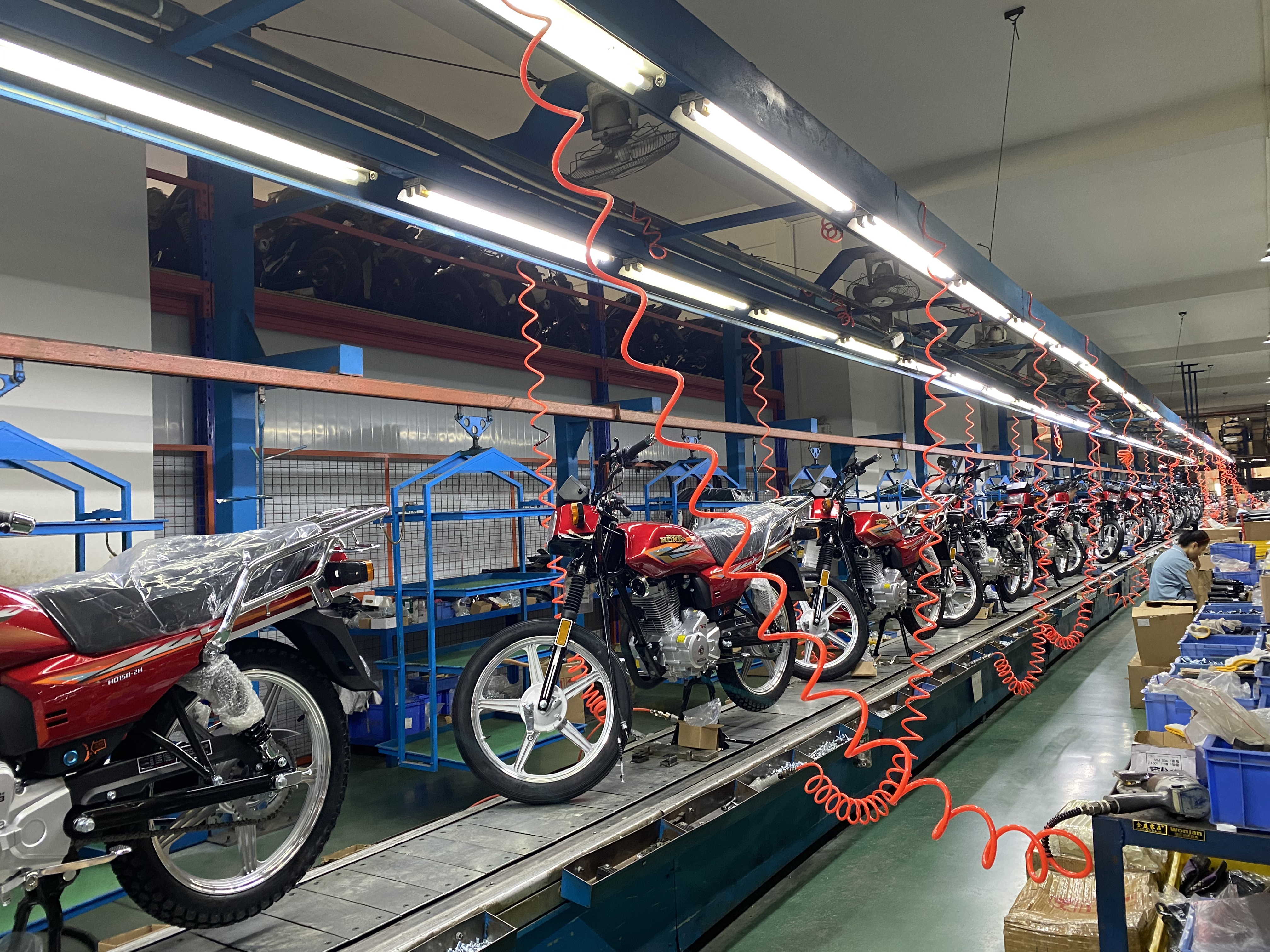 1. Component Preparation: First, various components that have passed strict quality inspections are transported to the starting end of the production line. These components come from high-quality suppliers screened by Hekang Vehicle Industry and have undergone multiple quality inspection procedures before entering the factory to ensure that they meet the company's high standards. Staff will further sort, clean and pretreat the components to prepare for the subsequent assembly work.
2. Frame Assembly: The frame is the skeleton of a motorcycle, and its assembly quality directly affects the performance of the entire vehicle. In this process, workers use advanced tooling fixtures to precisely splice together the pipes that have been cut and formed according to the design requirements, and then complete the welding work through welding robots. After welding, the frame will undergo strict quality inspections, including weld strength inspection, dimension precision measurement, etc. Only completely qualified frames can enter the next process.
3. Installation of Power System and Key Components: Next, the power system components such as the engine that have passed debugging and inspection, as well as key components such as the braking system and suspension system, are accurately installed onto the frame. This process needs to be carried out in strict accordance with the operation specifications to ensure that the installation positions and connection methods of each component meet the design standards, so as to guarantee the power output, driving safety and comfort of the motorcycle.
4. Installation of Electrical System and Accessories: Subsequently, the installation of the electrical system is carried out, including wiring, connecting various electronic components such as headlights, horns, dashboards, etc., and installing motorcycle accessories such as seats, foot pedals, rearview mirrors, etc. In this process, attention is also paid to details and quality control to ensure the normal operation of the electrical system and the firm and convenient installation of accessories.
5. Overall Vehicle Debugging and Testing: After completing the above assembly processes, each motorcycle will enter a dedicated debugging and testing area. Professional technicians will conduct a comprehensive debugging of the entire vehicle here, including checking the starting and running status of the engine, testing the braking performance of the braking system, adjusting the comfort of the suspension system, etc. At the same time, advanced testing equipment will be used to detect various performance indicators of the vehicle, such as speedometer accuracy detection, light brightness detection, exhaust emission detection, etc. Only motorcycles that have passed all debugging and testing items and whose various indicators meet the standards will be allowed to come off the production line.
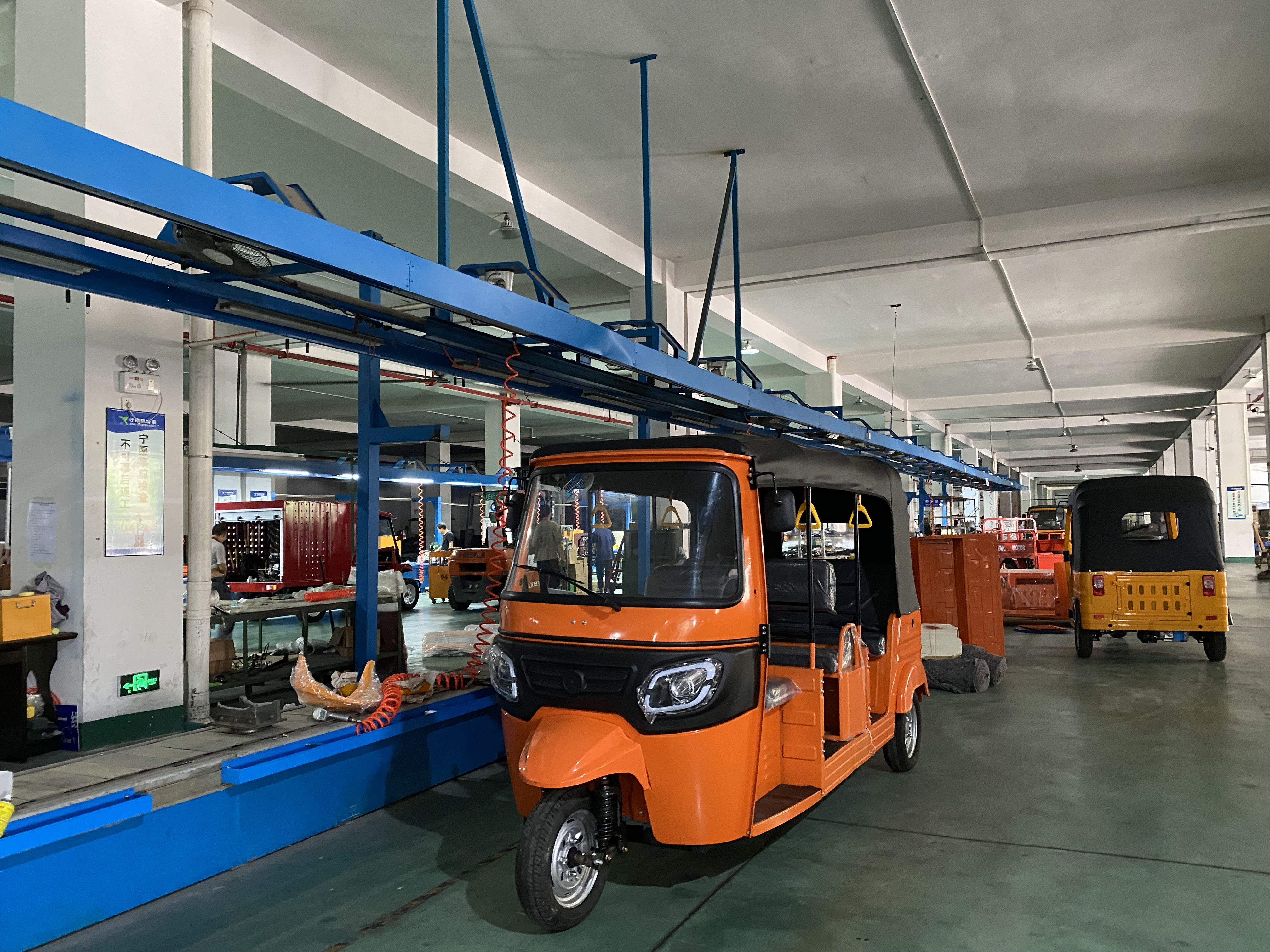
III. Quality Control
1. Multi-layer Quality Inspections: In the entire production assembly process, multiple layers of quality inspection checkpoints are set up. From the first-piece inspection when components enter the factory, to the patrol inspection and random inspection during the production process, and finally to the final inspection before the vehicle comes off the production line, each process has strict quality inspection standards and professional inspectors to ensure that quality problems can be traced back to the source in time once discovered, and corresponding corrective measures can be taken to ensure that the problems will not flow into the next process.
2. Strict Standard Execution: Hekang Vehicle Industry formulates a set of strict enterprise quality standard systems based on advanced motorcycle quality standards at home and abroad and combined with its own product characteristics. Every employee on the production assembly line has received professional training, is familiar with and strictly executes these quality standards, and is meticulous in work to ensure that the quality of each motorcycle can reach or even exceed the industry average level.
IV. Production Capacity and Efficiency
1. High Production Capacity: The production assembly line of Hekang Vehicle Industry has a relatively high production capacity. Currently, it has two production lines, and each production line can stably produce 10,000 motorcycles per month. The combined monthly production capacity of the two production lines is as high as 20,000 motorcycles. This enables the company to meet the large demand for two-wheeled and three-wheeled motorcycle products in the market in a timely manner, whether it is the domestic market or the international markets such as Africa and South America.
2. Continuous Optimization and Improvement: To further improve production efficiency and product quality, the company continuously upgrades the technology and optimizes the process of the production assembly line. By introducing new production technologies, improving equipment performance, optimizing work processes, etc., it gradually reduces production time and costs, improves the stability of production and the consistency of products, ensuring that Hekang Vehicle Industry maintains its advantage in the fierce market competition.
The production assembly line of Hekang Vehicle Industry, with its advanced equipment, rigorous technological processes, strict quality control and high production capacity, provides a strong guarantee for the company to produce high-quality two-wheeled and three-wheeled motorcycle products and is an important support for the continuous development of Hekang Vehicle Industry in the motorcycle industry.