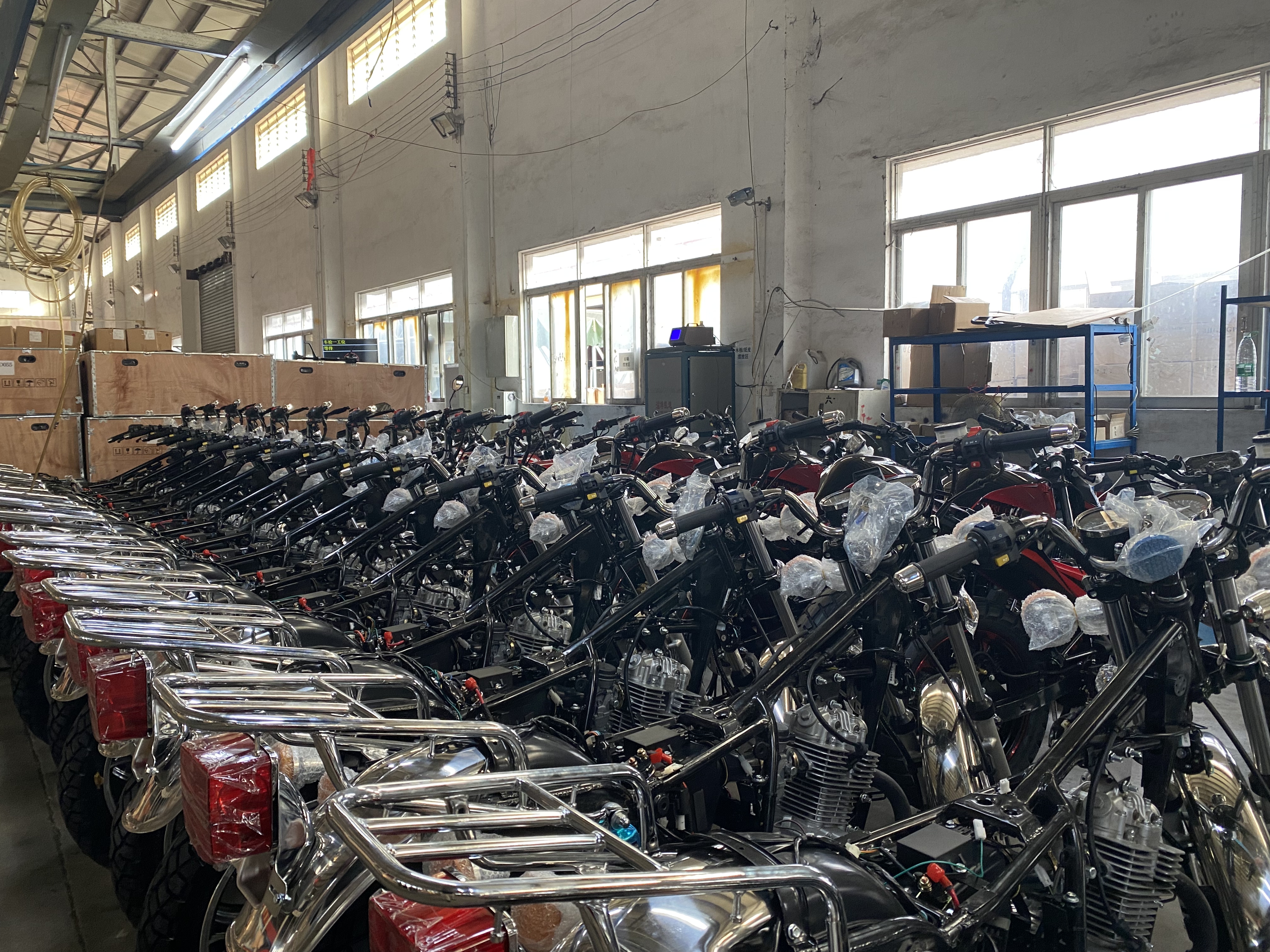
Finished Product Warehouse
The finished product warehouse of Hekang Vehicle Industry plays a crucial role in the overall operation of the company. It is the storage and distribution center for the finished products of two-wheeled and three-wheeled motorcycles, ensuring that the products can be transferred to the market in an orderly manner to meet the needs of customers.
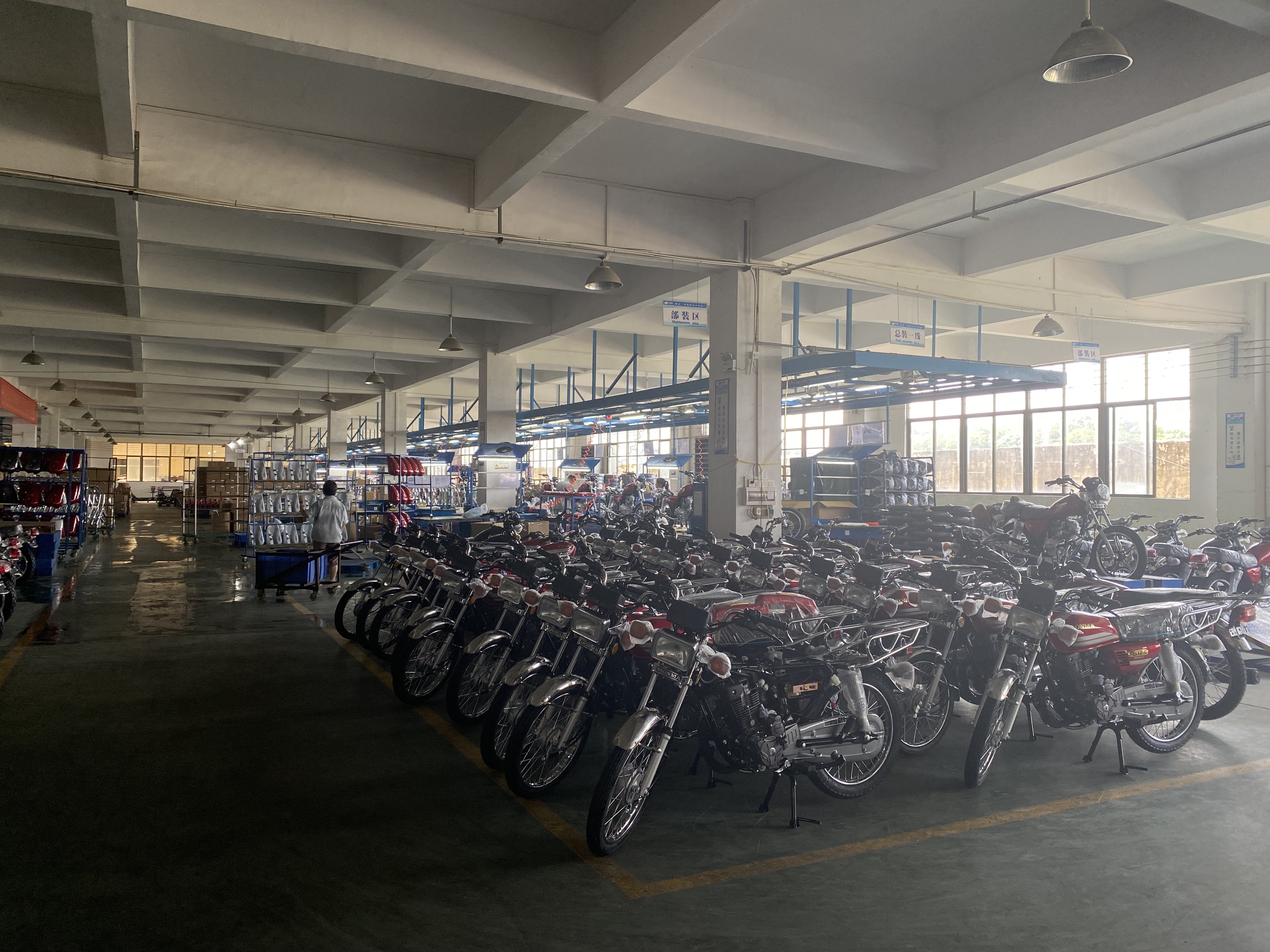
I. Warehouse Layout and Facilities
1. Reasonable Layout Planning: The interior of the warehouse has been carefully designed with a reasonable and orderly layout. Motorcycles of different models and specifications are stored in separate areas for easy and quick search and management. Meanwhile, clear passages are set up to ensure the smooth passage of handling equipment such as forklifts, facilitating the loading, unloading, and handling operations of goods.
2. Advanced Warehousing Facilities: A series of facilities suitable for storing motorcycle finished products are equipped. For example, sturdy shelves are used to neatly place motorcycles to avoid damage caused by collisions between vehicles. There are also special protective facilities such as fire prevention, moisture prevention, and dust prevention to protect the finished products from the influence of environmental factors and ensure that the vehicles remain in good condition during storage.
II. Storage Management
1. Categorized Storage: Motorcycles are strictly stored according to their types (two-wheeled or three-wheeled), models, and configurations. When receiving orders and needing to ship products, the staff can quickly locate the required products, thus improving the shipping efficiency. Moreover, vehicles of the same category are stored in adjacent areas, which also facilitates the daily inventory and management work.
2. Inventory Counting: Regular inventory counting is an important part of the management of the finished product warehouse. The staff adopts an advanced inventory management system combined with the method of on-site manual inventory counting to accurately grasp the inventory quantity, storage location, and other information of each motorcycle model. By updating the inventory data in a timely manner, it ensures that the company's management can understand the situation of the finished product inventory in real time, providing an accurate basis for the formulation of production plans and sales strategies.
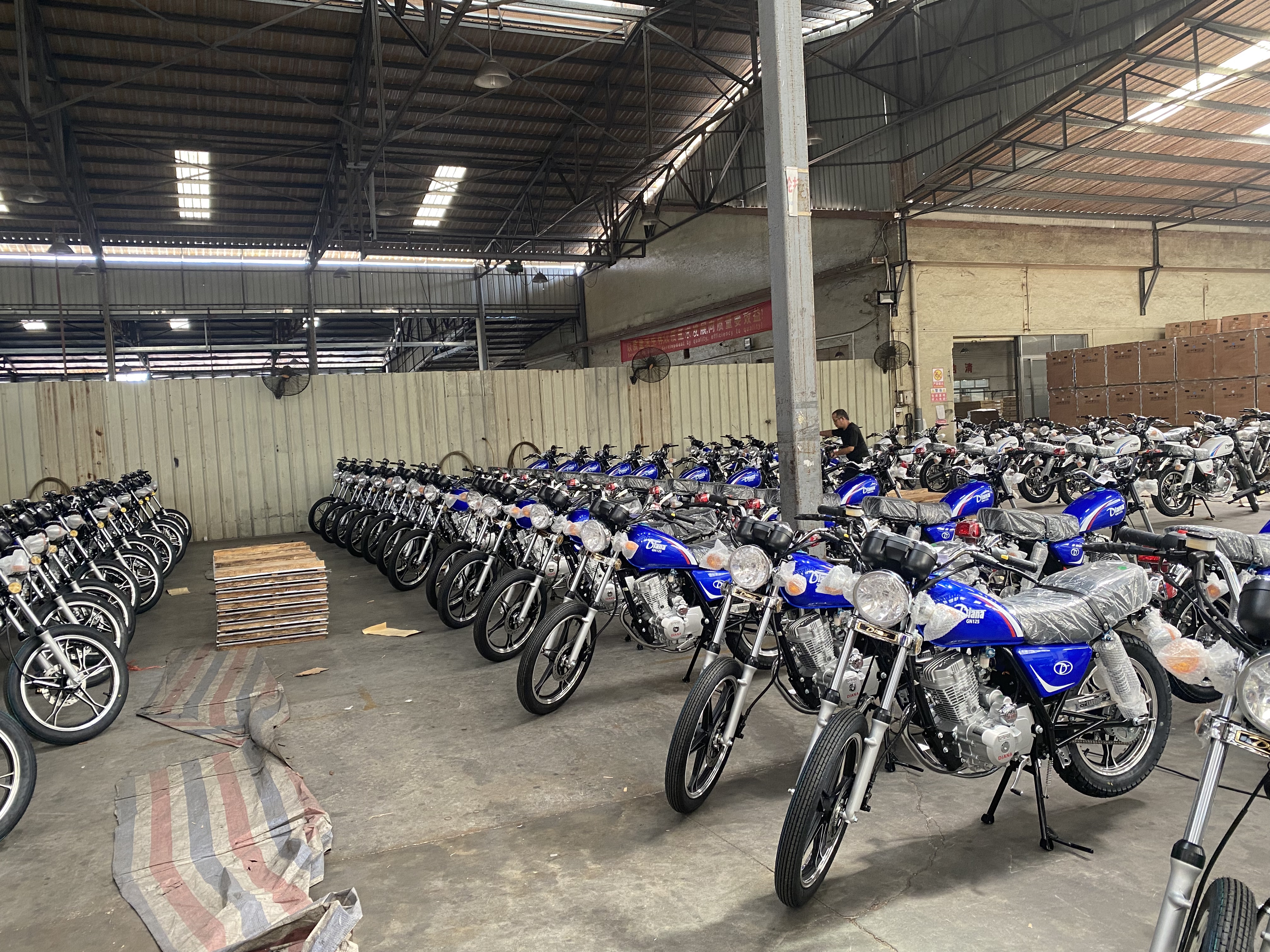
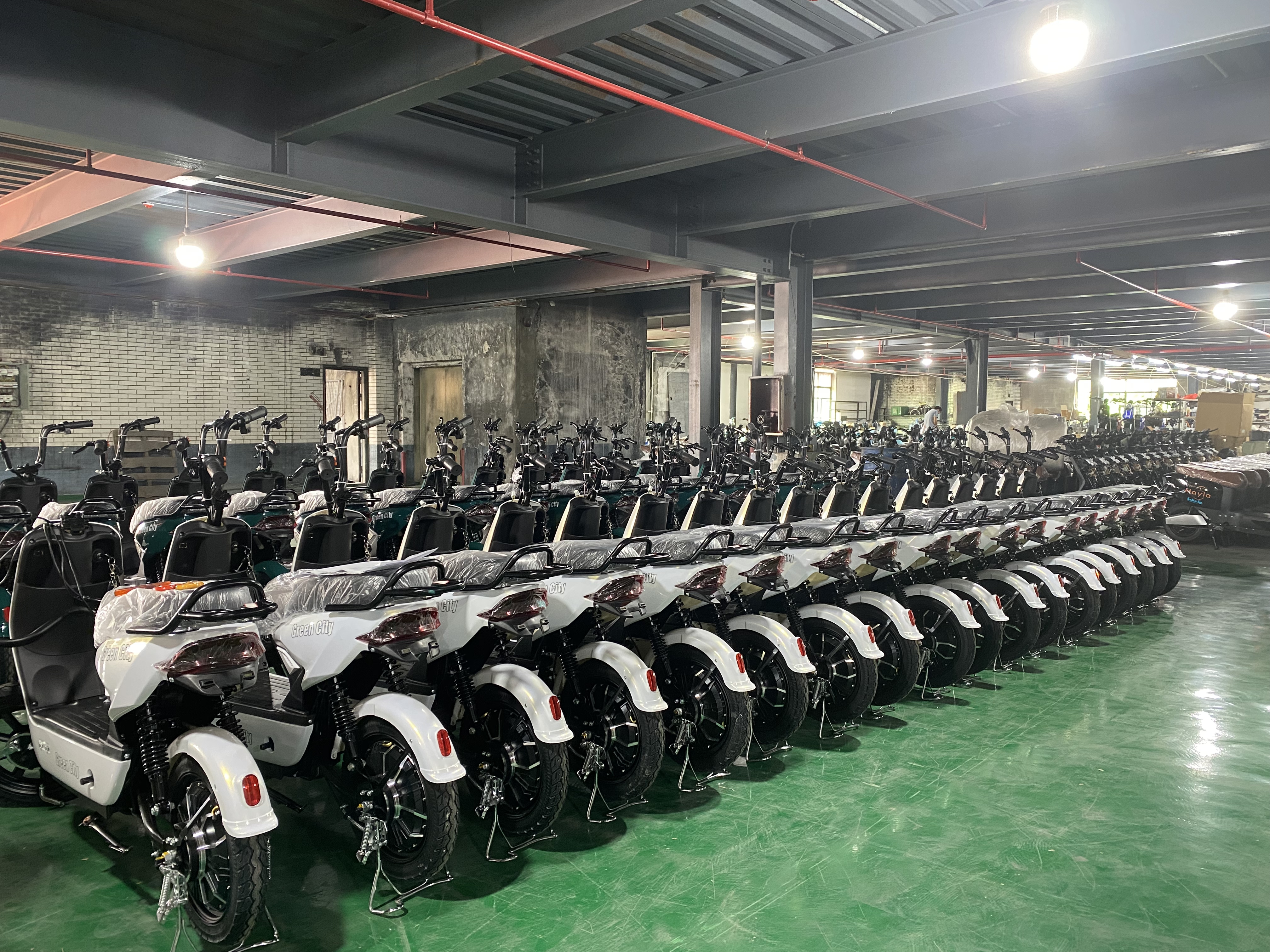
III. Inbound and Outbound Processes
1. Inbound Process: When the motorcycles on the production line are completed and pass the quality inspection, they will be transferred to the finished product warehouse for storage. During the inbound process, the staff will conduct a detailed inspection of each vehicle, checking whether the information such as the vehicle's model and configuration is consistent with the production records. Then, the vehicles will be placed in the corresponding positions according to the established categorized storage rules, and the inbound information will be entered into the inventory management system to update the inventory quantity.
2. Outbound Process: After receiving a sales order, the warehouse staff will quickly search for and extract the corresponding motorcycles from the inventory according to the requirements of the order. Before outbound, the vehicles will be inspected again to ensure that there is no damage to the vehicle's appearance and that the performance is normal, etc. After that, the relevant outbound procedures will be handled, the outbound information will be recorded in the inventory management system to reduce the corresponding inventory quantity, and the shipping arrangements for the vehicles will be made.
IV. Safety and Maintenance
1. Safety Guarantee Measures: The warehouse attaches great importance to safety issues. Besides being equipped with basic fire prevention, moisture prevention, and dust prevention facilities, a monitoring system is also installed to achieve all-round and uninterrupted monitoring of the warehouse to prevent the occurrence of unexpected events such as theft and fire. At the same time, a complete safety management system has been formulated, and the staff is regularly trained on safety to improve their safety awareness and emergency handling capabilities.
2. Warehouse Facility Maintenance: To ensure the continuous normal operation of the warehouse facilities, the shelves, handling equipment, and protective facilities are regularly maintained and serviced. For example, the stability of the shelves is checked, and damaged parts are repaired or replaced; the handling equipment such as forklifts is inspected to ensure its good performance; the fire prevention, moisture prevention, and other protective facilities are detected and maintained to ensure the effective exertion of their protective functions.
The finished product warehouse of Hekang Vehicle Industry effectively guarantees the storage, transfer, and safety of motorcycle finished products through scientific layout, standardized management, strict inbound and outbound processes, and complete safety and maintenance measures, providing strong support for the company's sales business.